
Last updated November 15, 2026
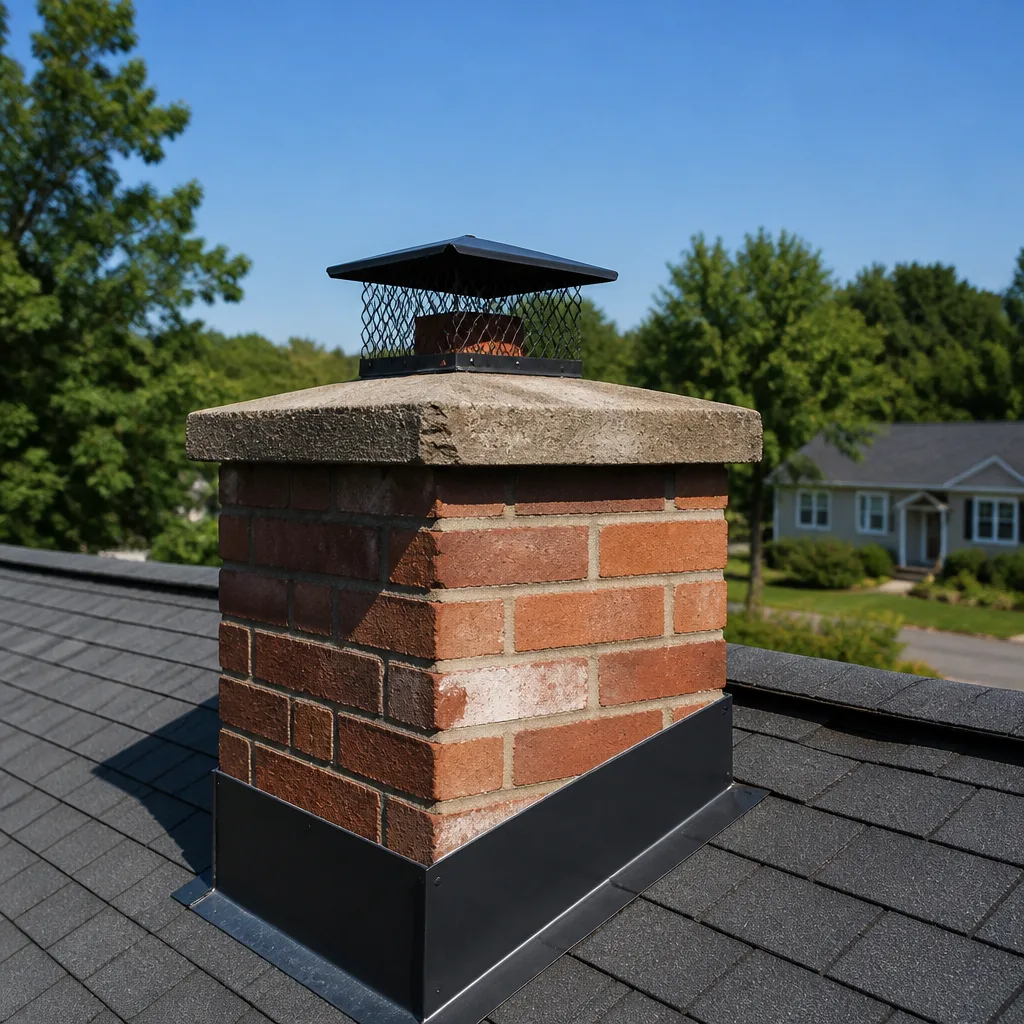 Sweep & inspection
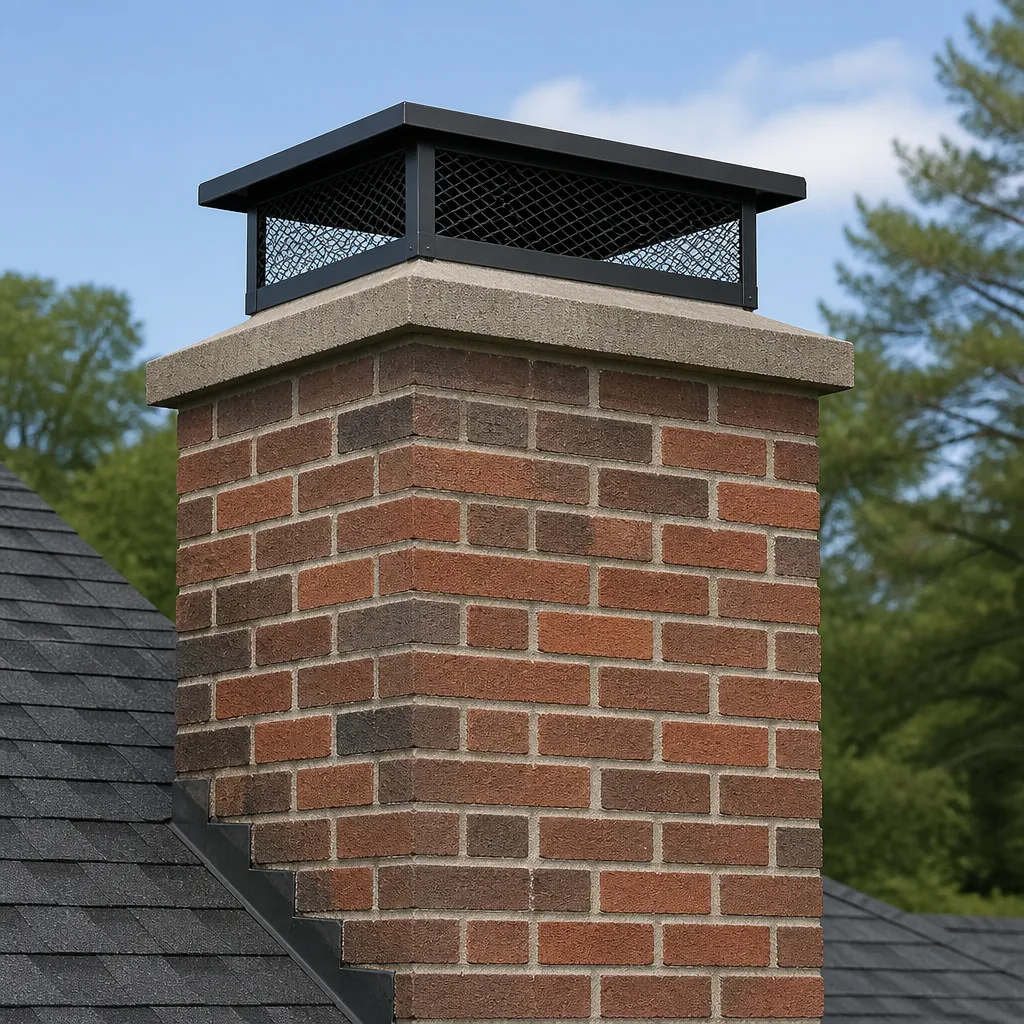 Caps & crowns
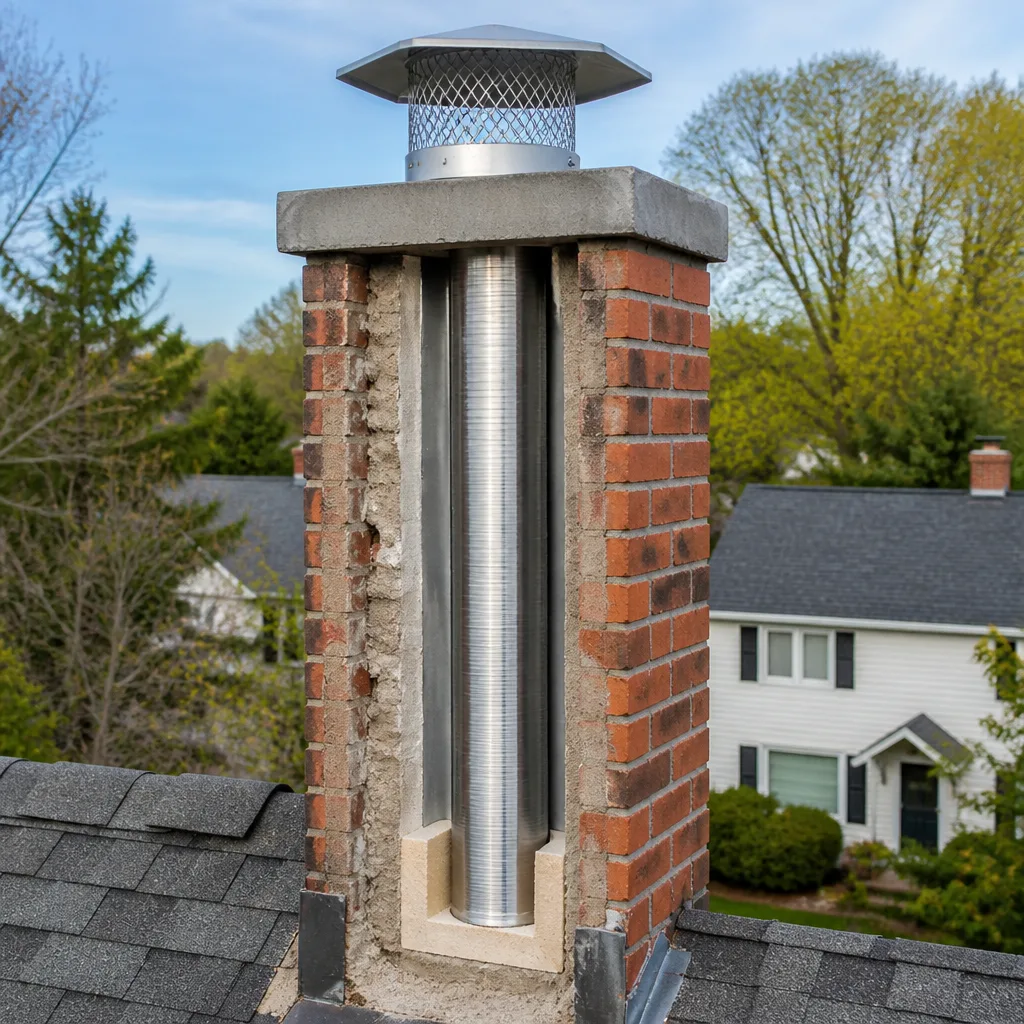 Flue relining
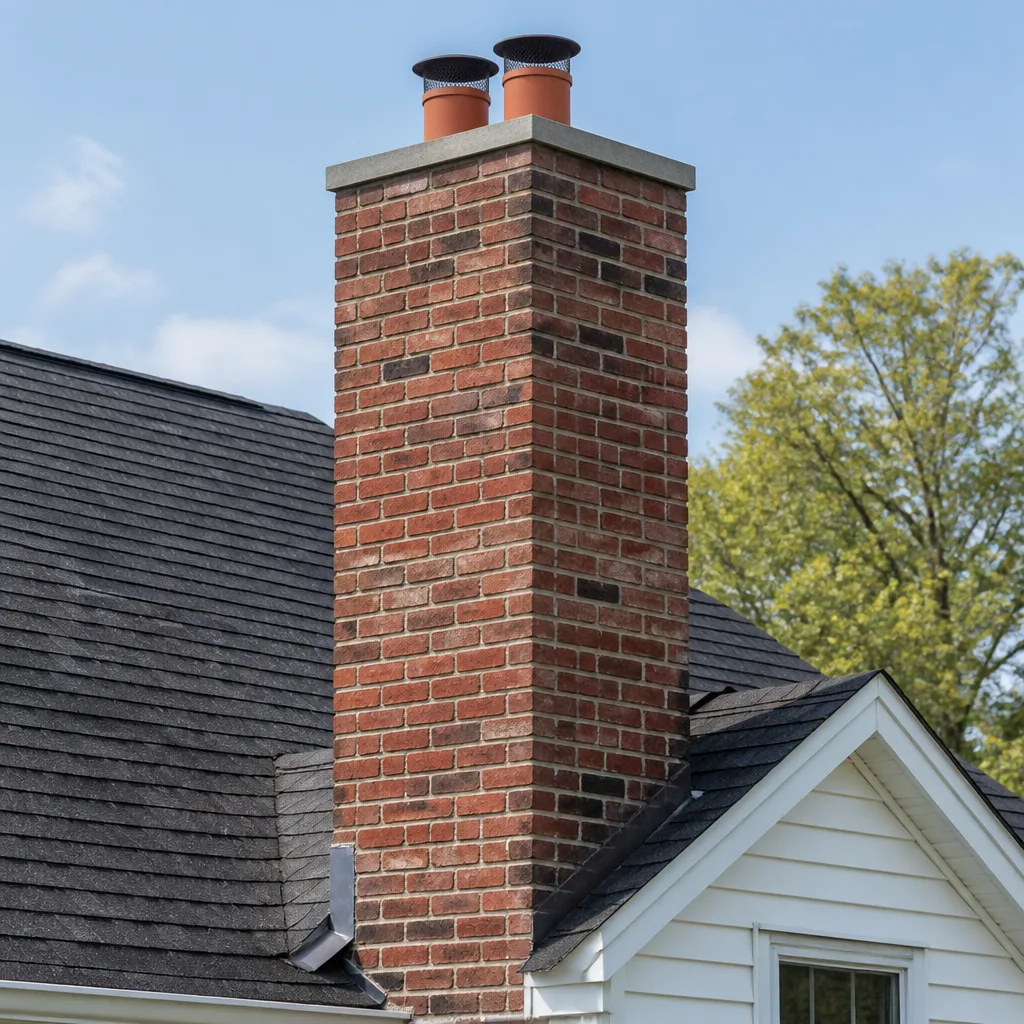 Masonry repair
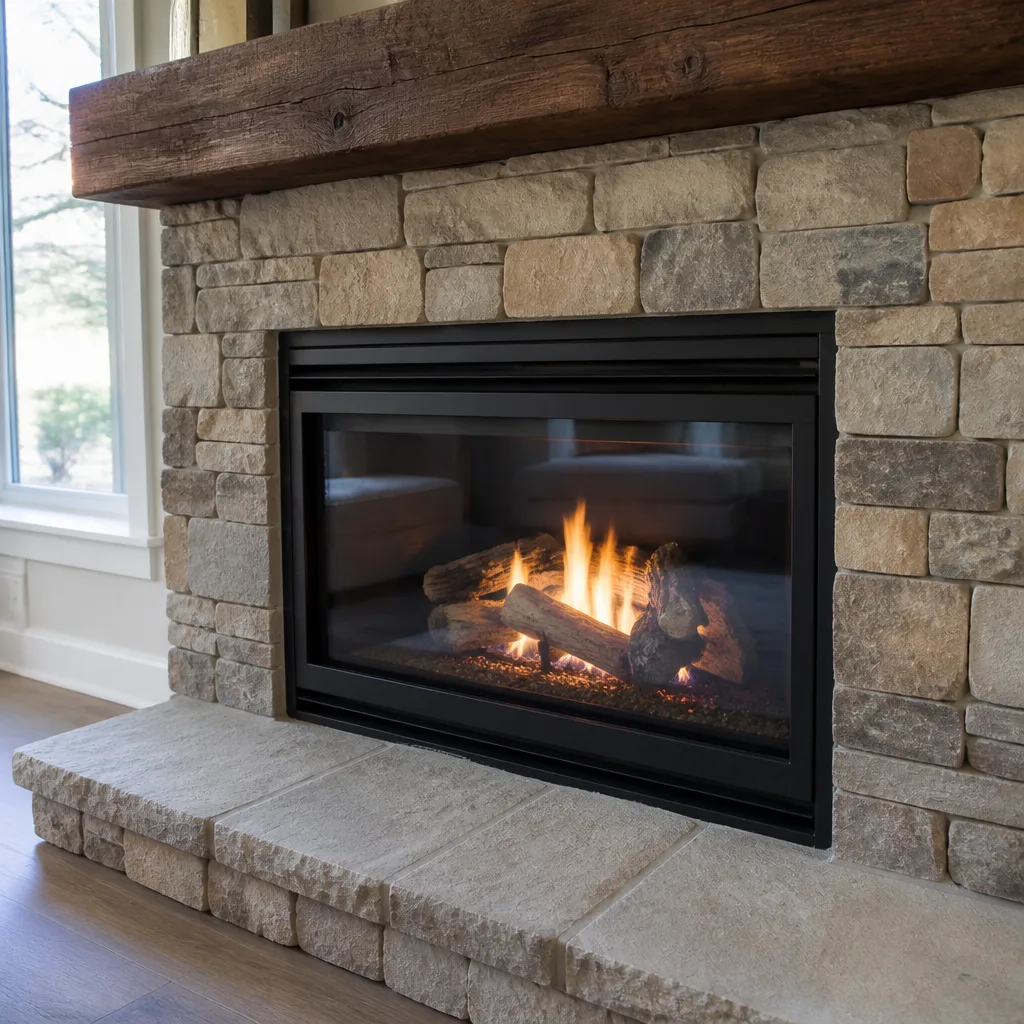 Gas fireplace service
Level 1 sweep and inspection to the NFPA 211 annual standard - flue, crown, cap, and flashing checked and photographed
Chimney sweep logs do not sweep chimneys. They loosen some creosote - which then falls where a brush and vacuum still have to collect it.
Chimney Cleaning Warning Signs: A Brandon Homeowner’s Reference Guide
Most chimney warning signs get described in vague, unhelpful terms. “Look for creosote buildup.” “Watch for draft problems.” “Check for water damage.” That advice assumes you already know what creosote looks like, how a draft problem feels, and what water damage to a chimney actually resembles. You don’t, and you shouldn’t have to guess. Here’s the honest version: a campfire smell drifting through your living room isn’t a nuisance, it’s a signal. In Brandon, where homes stay closed up and air-conditioned through the long humid months, that smell spreads faster and lingers longer than most homeowners expect. This guide gives you observable, specific descriptions of what each warning sign looks, smells, and sounds like, and what it indicates structurally.
Quick Answer
Chimney cleaning warning signs fall into three categories: smell indicators (acrid creosote, musty moisture, sharp ammonia), visual indicators inside the firebox (spalling brick, white efflorescence, rust staining), and performance indicators (smoke rollout, delayed ignition, sluggish draft). Any one of these signs on its own may seem minor. Two or more together usually point to a real problem that a professional inspection needs to confirm. If you’re noticing anything on this list and you’re in Brandon, don’t wait for the next burning season to have it looked at.
Styles & brands we work with
- Sweep & inspection
- Caps & crowns
- Flue relining
- Masonry repair
- Gas fireplace service
Table of Contents
- What chimneys can tell you through smell alone
- Reading the firebox: spalling, efflorescence, and rust
- Draft and combustion warning signs
- Exterior indicators unique to Florida’s climate
- When a “minor” sign is actually a late-stage indicator
- A three-level assessment framework for homeowners
- How often to sweep and what cleaning actually removes
- When to call in a specialist
What Chimneys Tell You Through Smell Alone
Smell is the most underused diagnostic tool a homeowner has, and it’s more reliable than most people realize. The trick is learning to tell three distinct odors apart, because each one points to a completely different problem.
Sharp, acrid, campfire-like: This is creosote. When a fire isn’t burning hot enough or the flue isn’t drafting properly, unburned wood gases condense on the flue walls as creosote. It has a distinct, biting edge to it that a normal woodsmoke smell doesn’t. In Brandon’s warm months, when a fire may only be lit occasionally and the chimney isn’t getting the hot burn it needs, that creosote tends to build up slowly and go unnoticed until the smell becomes obvious. More importantly, a persistent campfire smell in the house when no fire is lit usually means negative draft or a failed damper seal. The chimney is pulling air down than pushing smoke up.
Musty, damp, earth-like: This points to moisture intrusion somewhere in the chimney system. It might be a failed crown, cracked flashing, or a compromised chase cover. Moisture getting into a masonry chimney weakens it from the inside, and the smell is your first notice that water is finding a way in.
Sharp, ammonia-like, animal: This is the unmistakable signature of wildlife. Birds, squirrels, and raccoons commonly find their way into uncapped chimneys. The smell is pungent and hard to mistake for anything else once you’ve encountered it. You may also hear scratching or rustling, especially at dawn and dusk.
If you can’t tell the difference, that’s not a failure. It’s a reason to have someone trained to identify the source. Our technicians have up to 10 years of experience distinguishing these indicators in Brandon homes.
Why Smell Spreads Faster in Brandon
Brandon homes tend to stay closed up through the hotter parts of the year. When windows are shut and the air conditioning is running, any smell introduced into the living space has nowhere to go. It circulates through the return air and gets pushed back into rooms. That campfire smell that would drift out an open window in a more temperate climate lingers here and gets re-noticed for hours or days. It’s one reason we take smell as an early and reliable warning sign in this climate.
Reading the Firebox: Spalling, Efflorescence, and Rust Staining
The inside of the firebox and the firebox walls are the most direct source of diagnostic information in the entire chimney system. You don’t need to do anything technical to spot these three signs. You just need to know what you’re looking at.
- Spalling brick: Brick faces peeling, flaking, or popping off. Spalling is a sign that moisture has penetrated the brick and is breaking it down from the inside. It can also indicate a chimney fire has damaged the firebox. Either way, spalling brick isn’t cosmetic, it’s a structural warning.
- Efflorescence: A white, powdery, chalky residue on the firebox or chimney walls. It looks like salt stains. Efflorescence is the visible result of moisture moving through masonry and leaving mineral deposits behind as it evaporates. On its own, efflorescence doesn’t mean the chimney is collapsing. It does mean water is actively getting through. If you see efflorescence and spalling together, the water problem is advanced.
- Rust staining: Brownish-red streaks on the firebox walls, damper, or the interior of the chimney. Rust means metal components are corroding. On a firebox, that could be the damper, the firebox grate, or metal liner components. Rust in a chimney is a serious indicator because it means water has been present inside the system long enough to attack metal. It’s not a thin film from a single wet event, it’s the result of repeated exposure.
When we see efflorescence alone, we may advise a repair to the moisture source and a resurfacing option if the masonry is still structurally sound. When we see all three on the same chimney, the damage is much more substantial. That’s where a product like chimney repair becomes a priority, because patching the surface doesn’t solve a structural infiltration problem. HeatShield, a resurfacing system we’re qualified to apply, addresses the flue interior where moisture has degraded the surface. It’s a service most generalist sweeps don’t offer.
Draft and Combustion Warning Signs
Draft is how well a chimney pulls combustion gases up and out. When draft is compromised, most homeowners notice it as a performance issue, not a safety issue. That’s the problem. Here’s what the warning signs actually look like:
- Smoke rolling out of the firebox when you open the stove door. Some smoke rollout during ignition is normal. But if smoke consistently puffs out into the room every time you open the door, even after the fire is established, that’s a draft problem. It can point to a liner that’s undersized, a flue that’s obstructed, or a damper not opening fully.
- Delayed ignition or a fire that struggles to catch. A fire that takes multiple tries to light, or that dies down almost immediately even with dry wood and good airflow, often signals that the chimney isn’t drafting properly. Combustion depends on consistent airflow, and a compromised chimney will starve a fire.
- Flame behavior that’s sluggish or uneven. A fire that leans to one side, burns poorly on one edge, or produces visible smoke that hangs in the firebox instead of going up the chimney is a combustion warning. It’s not always the wood, it may be a liner problem or a partially blocked flue.
- Delayed smoke detection. If smoke doesn’t appear until well after you’ve started a fire, or if smoke lingers in the firebox instead of being drawn upward immediately, the draft is weak. This is often the first warning sign a homeowner notices, and it’s easy to dismiss as “normal for wood fires.”
Draft problems compound. A poorly drafting chimney allows creosote to build faster, which further restricts the flue, which makes the draft worse. It’s a loop. When we inspect a Brandon chimney with a draft complaint, we use camera inspection and provide a photo report so you can see the obstruction or the liner condition for yourself, not take our word for it. DuraFlex liner systems are in our toolkit for the full relining projects that some of these draft issues require.
Exterior Indicators Unique to Florida’s Climate
Brandon’s climate does specific things to chimneys. The combination of heat, humidity, and heavy seasonal rain is hard on the exterior of the system. Most homeowners never look up at the chimney itself unless something is obviously wrong. Here’s what to look for from the ground.
- Biological growth on the chase cover. Green algae, moss, or dark mildew growing on the chase cover (the metal or masonry lid on top of a prefab chimney) tells you two things. First, moisture is sitting on the chase cover because the slope isn’t shedding water. Second, the cover is a candidate for replacement with a purpose-built component. We use Famco and Gelco components for chase covers and flashing because they’re designed to shed water properly, not improvised from generic sheet metal.
- Mortar erosion at the crown. The crown is the sloped concrete top of a masonry chimney. Look for missing chunks of mortar, cracks, or a crown that’s no longer sloping away from the flue. Florida’s heat expands and contracts the crown, and heavy rain erodes the mortar over time. A cracked crown lets water straight down into the chimney structure.
- Discoloration at the flashing line. Where the chimney meets the roof, there’s a metal flashing system that keeps water out. If you see dark staining, streaks below the flashing, or caulk that looks dried out and cracking, water is getting past the seal. Flashing repairs done with the right components look different from flashing repairs done with a caulk gun and hope.
These exterior signs are often where the moisture intrusion starts, and they eventually show up inside the firebox as efflorescence or rust. Fix the exterior problem and you prevent the interior damage.
When a “Minor” Sign Is Actually a Late-Stage Indicator
Some warning signs look small and turn out to be advanced. This is the pattern most homeowners miss, and it’s the reason we wrote this guide the way we did.
A hairline crack in the crown of a chimney can be the first sign of a problem that’s been developing for years. Once water finds its way through that crack, it freezes and expands in cooler months (not many here, but the cycle does happen), then erodes the mortar, then causes spalling brick on the firebox interior. The hairline crack looks minor. The underlying issue is a chimney falling apart from the inside.
The same is true of efflorescence. A little white powdery residue on the firebox wall reads as “cosmetic.” It’s actually a confirmation that moisture has been migrating through the masonry long enough to push minerals to the surface. That’s a structural problem with a cosmetic appearance.
The pattern we see most often in Brandon: a homeowner notices one smell or one stain, assumes it’s not urgent, and lives with it for another heating season. By the time they call, the problem that could have been resolved with a cleaning and a repair is now a relining project. Warning signs are rarely isolated. If you notice one, treat it as the start of a diagnostic conversation, not the end of one.
A Three-Level Assessment Framework for Homeowners
Here’s a simple way to triage what you’re noticing so you know roughly how soon to have it looked at. This is a triage tool, not a diagnosis. A visual inspection with camera and photo documentation is what confirms what’s actually happening.
- Level 1 (routine): You’re noticing one soft indicator, like a slight musty smell after summer, or a small area of efflorescence. Nothing is affecting how your fire burns. Book a cleaning and inspection before the burning season starts.
- Level 2 (soon): You’re seeing two or more of the following: creosote smell when no fire is lit, visible spalling, smoke rolling into the room during ignition, or visible moisture staining. Book an inspection within a few weeks.
- Level 3 (prompt): Smoke entering the room consistently, strong chemical or animal smells, cracks in the firebox interior, rust staining visible on the damper or firebox walls, or a history of chimney fires. This warrants a service call and inspection without waiting.
We’ve found this triage works well for Brandon homeowners because it accounts for how quickly a warning sign can escalate in a hot, humid climate. It also keeps the response proportional to the actual sign, so you’re not worried about a small issue or ignoring a real one. A routine chimney sweep with camera inspection usually catches most of these issues in the same visit.
How Often to Sweep and What Cleaning Actually Removes
Chimney sweeping isn’t about removing ash, and it’s not a cosmetic service. Cleaning removes the creosote deposits that build on the flue walls and pose a fire risk. Creosote is what burns in a chimney fire, and what form it’s in matters:
- First-degree creosote: Soft, flaky, dark residue that brushes off easily. Standard sweeping removes this.
- Second-degree creosote: Dense, hardened, tar-like residue that requires more aggressive brushing.
- Third-degree creosote: Glazed, hard, glass-like deposits that cannot be brushed away and often require chemical treatment or, in severe cases, relining.
Most homeowners in Brandon should have their chimney inspected annually and swept as needed based on how much they burn. If you burn wood through much of the winter, annual sweeping is a reasonable baseline. If you only burn occasionally, an inspection will tell you what the flue actually looks like and whether cleaning is warranted. That’s the part competitors miss. A blanket “every year” recommendation without inspecting the flue can mean sweeping a clean chimney or skipping one that needs attention.
The cleaning itself uses rotary brushes sized to the flue, with drop cloths and HEPA vacuum control to keep your living space clean. We inspect with a camera before and after, so you get photo documentation of the condition and what was removed. If the inspection turns up a problem, we can address it the same visit for most cases, which is the advantage of using a chimney specialist rather than a generalist who hands you a card for “a guy who does repairs.”
When to Call a Professional
Call a chimney professional if any of the following is true: you’ve noticed smoke entering your living space more than once, you smell creosote or an acrid smell when no fire is burning, you see spalling brick or rust staining in the firebox, your fire has become difficult to start or burns poorly despite dry wood, you’ve had a chimney fire (even a small one), your chimney has no cap, you’re moving into a home with a fireplace you haven’t personally had inspected, or it’s simply been more than a year since the last inspection.
Don’t try to diagnose a draft problem or a structural issue by feel. A camera inspection, a photo report, and a written assessment take the guesswork out of it. Brandon Chimney Sweep offers free estimates in Brandon. Call (866) 501-5479. We answer 24/7. Fast dispatch from 7am to 7pm, Sunday through Friday.
See the difference
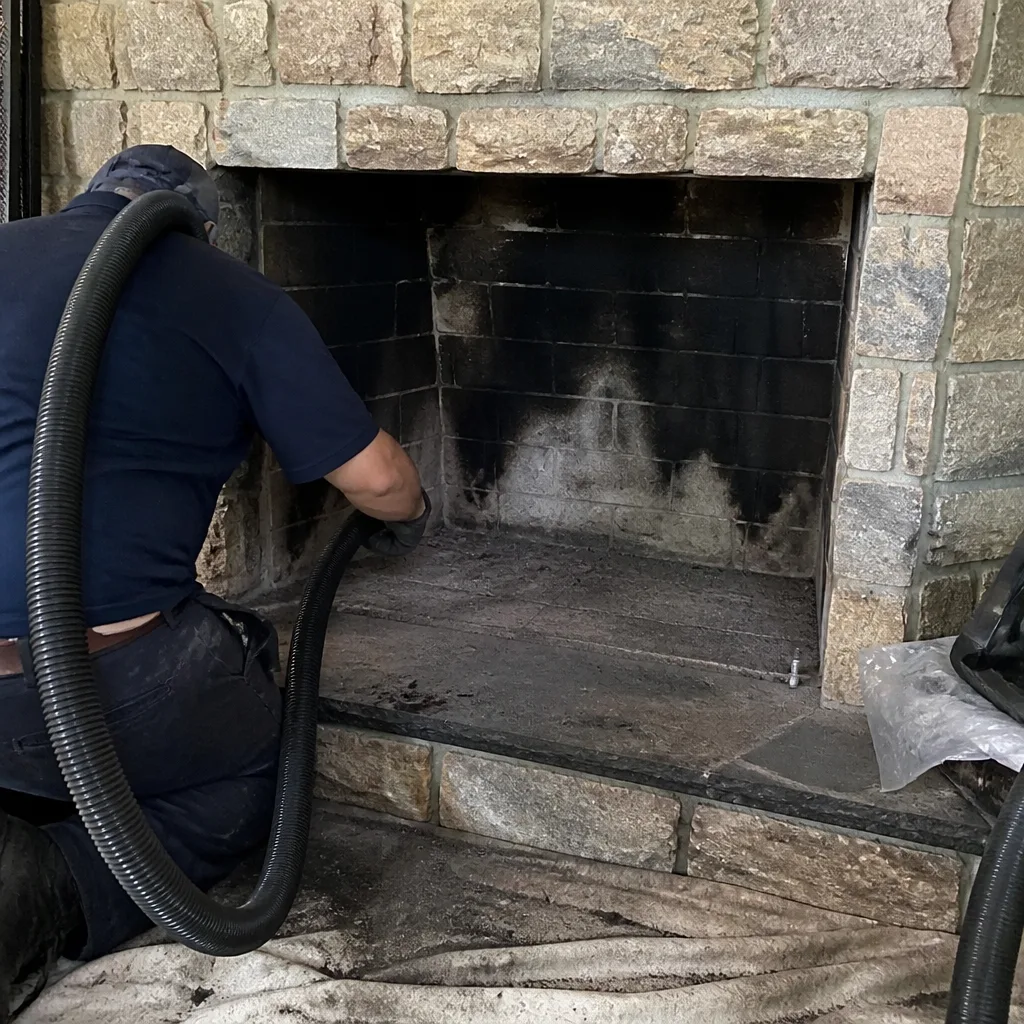 Before
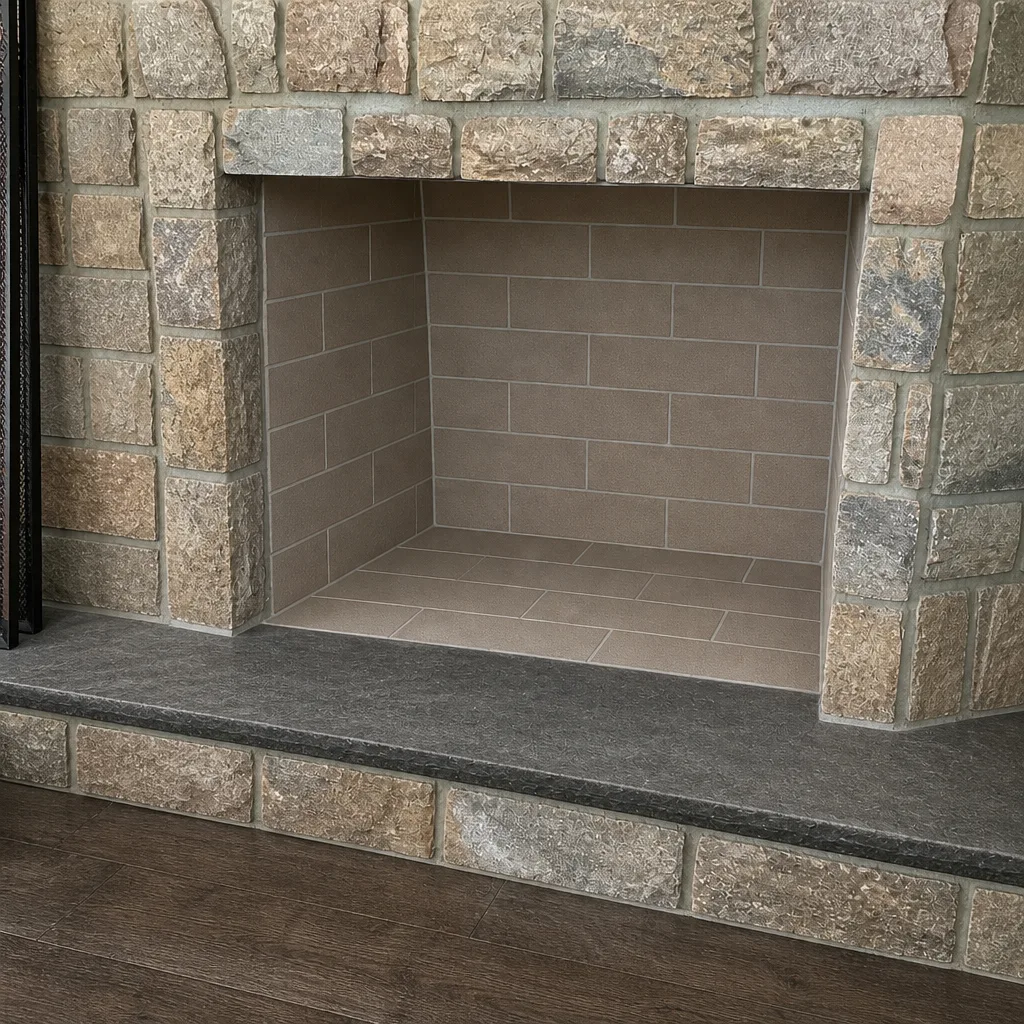 After
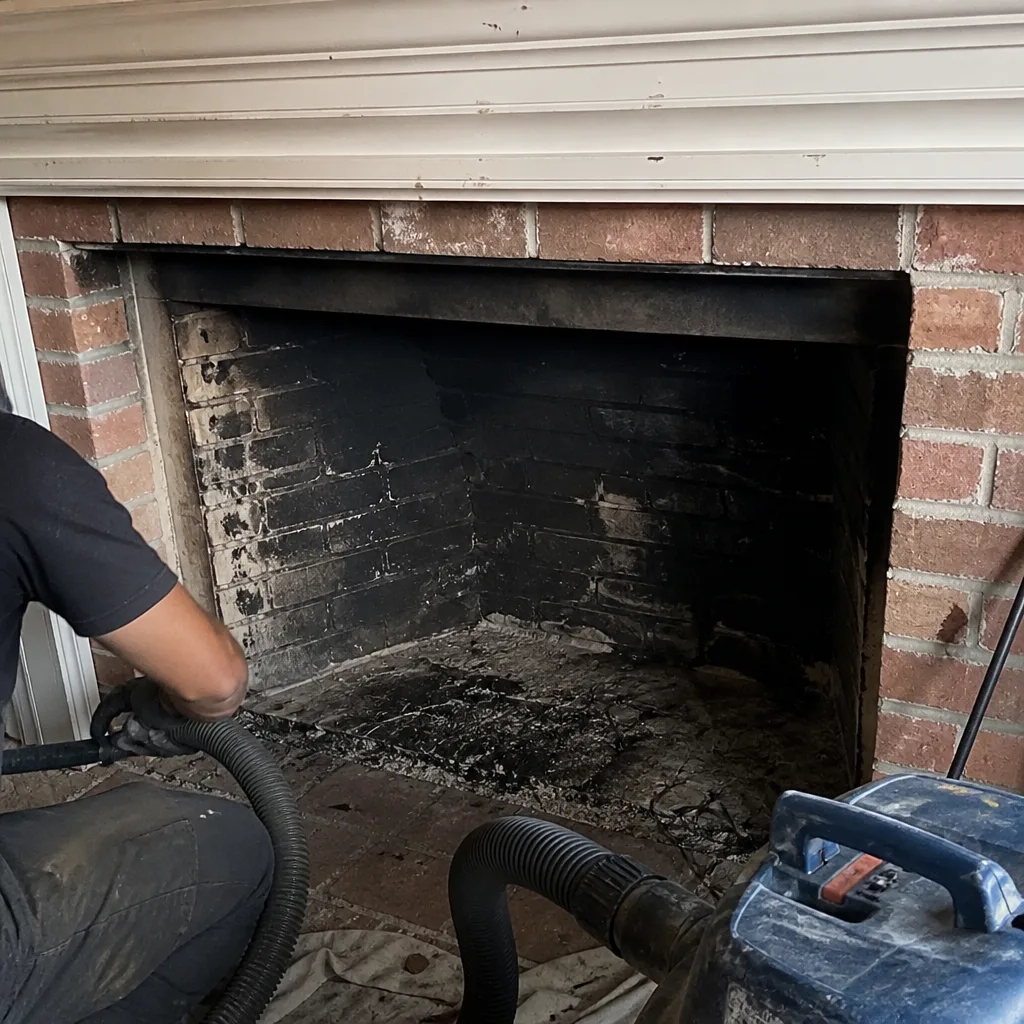 Before
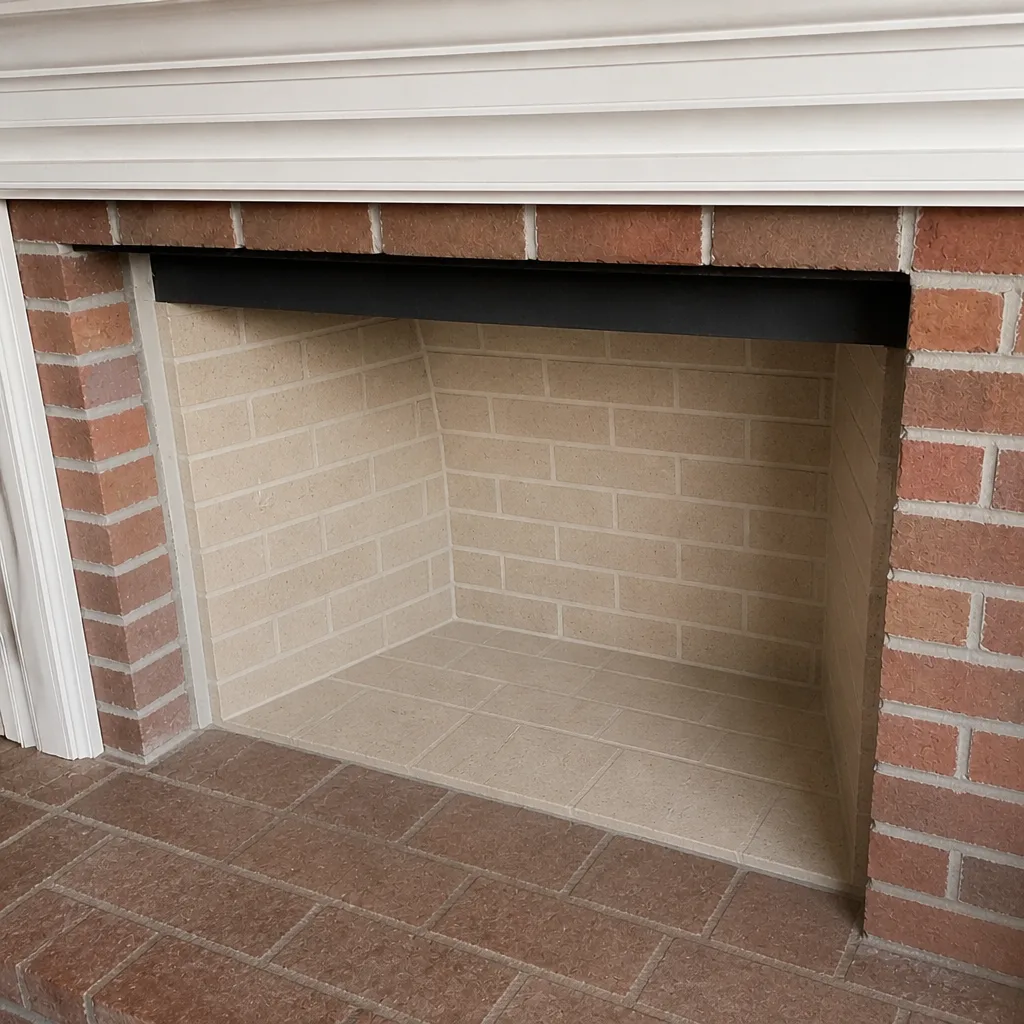 After
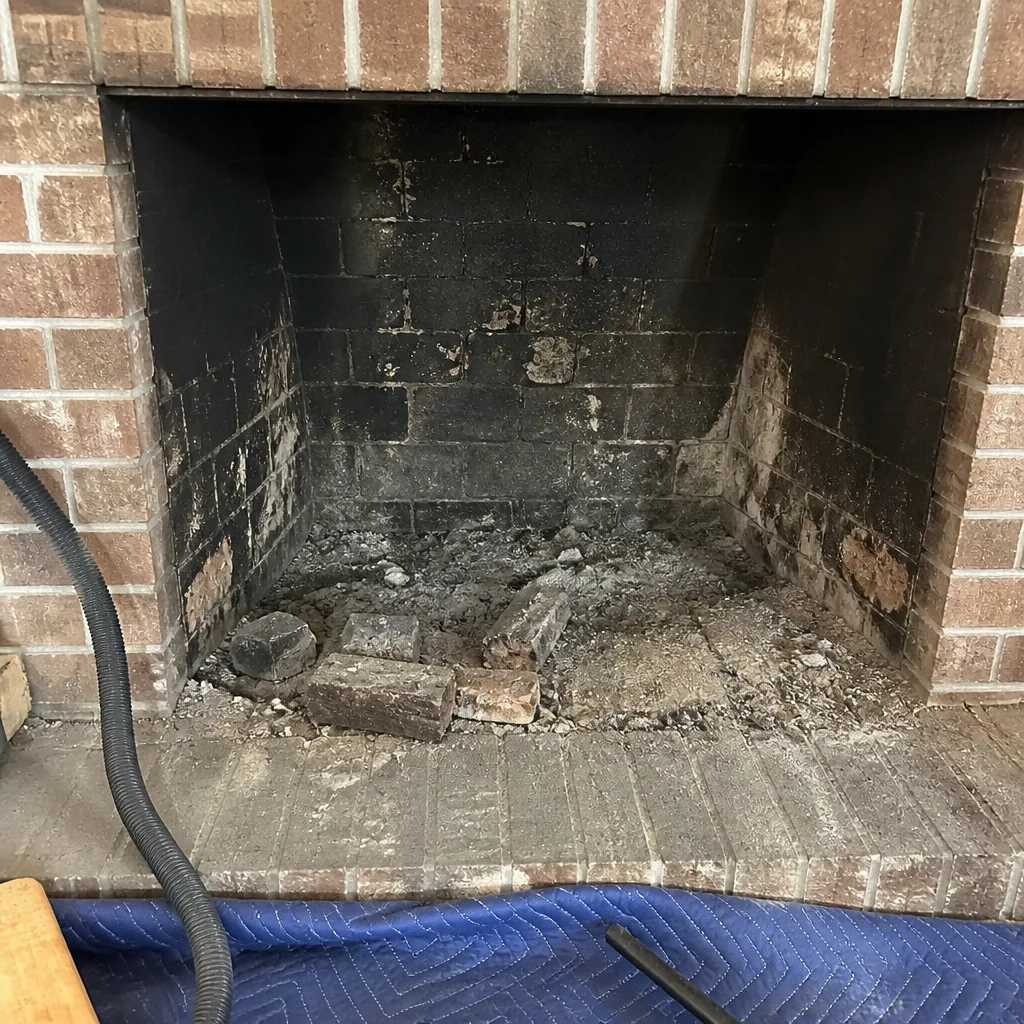 Before
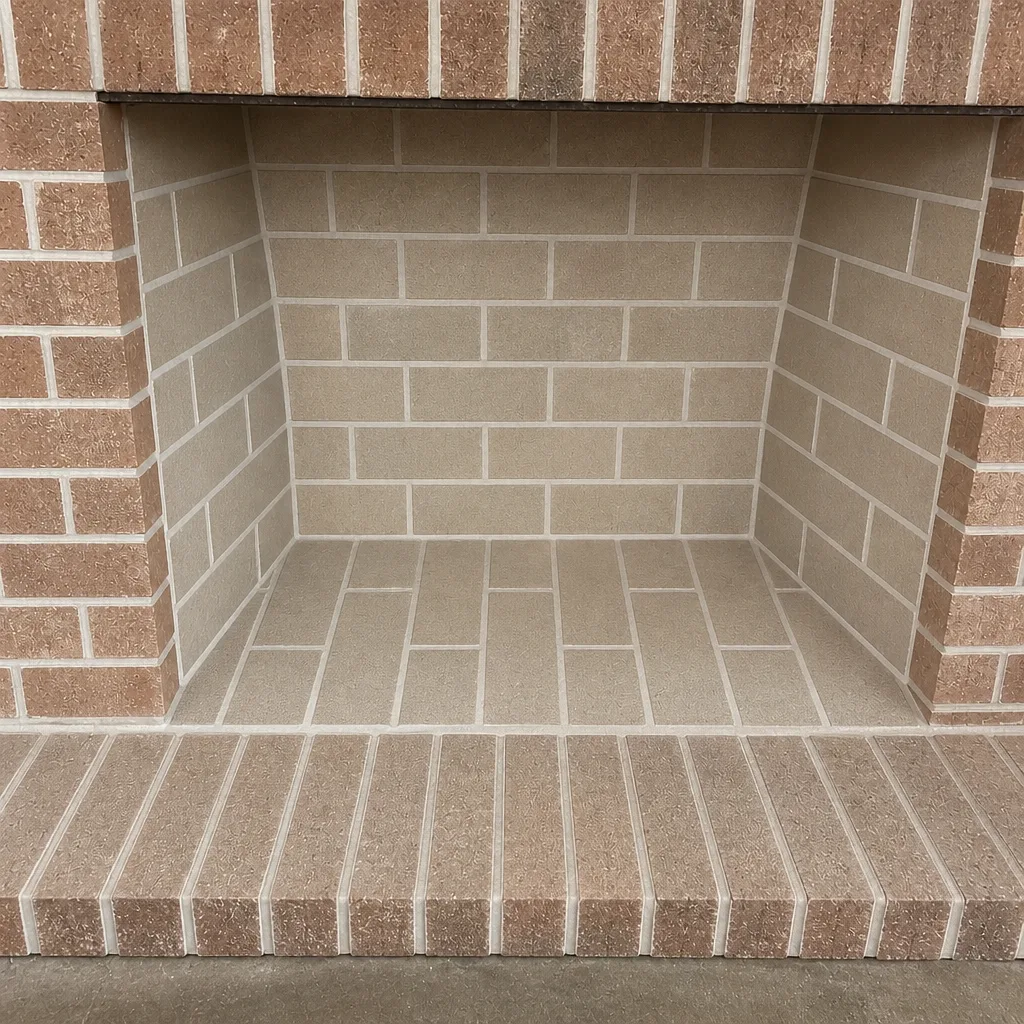 After
Frequently Asked Questions
Creosote smells sharp, acrid, and campfire-like, but the key distinction is that you smell it when no fire is burning. A faint woodsmoke smell with a fire going is normal. A persistent, biting, campfire smell in the house days after a fire indicates creosote buildup or a negative draft condition pulling air down the flue. If it’s strong enough to notice without looking for it, have the chimney inspected. Call (866) 501-5479 for an exact quote.
You can get useful information from the ground and from the firebox. Look for smoke stains around the firebox opening, a white or chalky residue, spalling brick, and rust-colored staining anywhere inside the firebox. Outside, check the crown for cracks and look at the flashing line for dark streaks. If you notice two or more of these, book an inspection. A camera inspection with a photo report is how the actual condition of the flue gets confirmed.
In Brandon, a musty smell coming from the chimney area is almost always a chimney moisture problem. It points to water getting into the chimney structure, typically through a failed crown, cracked flashing, or a chase cover that’s no longer shedding water. A musty smell that gets stronger after heavy rain is a strong indicator. It’s worth having the exterior components checked along with the interior.
Yes, because of what it allows. A small crack lets water into the masonry, where it causes spalling brick, mortar erosion, and eventually interior damage that requires resurfacing or relining. The crack itself looks minor, but the water infiltration it permits is the actual problem. We inspect the crown as part of every chimney inspection in Brandon and can repair it with purpose-built components.
A sweep is the cleaning of creosote and deposits from the flue. An inspection is the assessment of the overall system condition, including the flue, firebox, damper, crown, flashing, and cap. A thorough service includes both: the sweep removes what’s built up, and the inspection catches structural issues that cleaning alone won’t reveal. We do both under the same roof, so if the inspection finds a problem, we handle the repair too.
A chimney needs a liner replacement when the existing flue lining is cracked, deteriorated, or missing entirely, or when the chimney was never lined to begin with. Signs that a liner may be compromised include draft problems, smoke rollout, and visible damage on camera inspection. A camera inspection is how this is confirmed, not a visual look down the flue from the firebox. We handle DuraFlex liner installations for full relining projects, which means we can repair and restore the flue, not just report a problem.
Rust staining means water has been present inside the chimney long enough to corrode metal components. It’s not a light film from one damp day. It indicates repeated moisture exposure, and it needs a professional inspection to determine the source and the extent of the damage. In Brandon homes, this is often connected to a failed crown or a chase cover that’s no longer doing its job.
Common Mistakes to Avoid
- Assuming a campfire smell is normal. It’s not. A persistent campfire smell when no fire is burning is one of the most reliable early indicators of negative draft or a failed damper seal. Treat it as a diagnostic finding, not a quirk of a wood-burning home.
- Waiting until fall to call. By the time burning season arrives, you’re competing with every other homeowner for scheduling. Getting an inspection done in the off-season catches issues before the first fire of the year. And in Brandon, the hot, humid months are actually when moisture damage is most active.
- Ignoring efflorescence on the firebox. The white powdery residue looks cosmetic. It’s a confirmation of active moisture migration through the masonry, and it usually means a repair is needed somewhere upstream, like the crown or flashing.
- Confusing a general contractor with a chimney specialist. Chimney work is niche. General contractors and handymen may patch a crown, but the work often needs purpose-built components like Famco or Gelco flashing and caps, or a trained application of HeatShield on the flue interior. Those are not hardware-store fixes.
- Buying a “chimney sweep brush” from a retail store and doing it yourself. A retail brush removes loose soot. It doesn’t remove second or third-degree creosote, it doesn’t reveal a structural problem, and in an unlined or damaged flue it can make the damage worse. Sweeping isn’t the hard part. Knowing what condition the flue is in when you’re done is.
- Assuming the “smoke smell after rain” is just the weather. Smoke smells that intensify after a rainstorm typically point to water entering through the chase cover or flashing, then moving into the masonry. It’s a moisture problem in disguise.
- Taking a single sign as the whole diagnostic picture. Warning signs are rarely one-offs. If you notice one, look for others and have the system inspected. The combination tells the story more reliably than any single observation.
The Bottom Line
Chimney warning signs are not a mystery, and they’re not invisible. Smell tells you about creosote, moisture, and animals. Visual indicators inside the firebox tell you about water infiltration severity. Draft and combustion behavior tells you about the liner, damper, and airflow. Exterior markers tell you about the crown, chase cover, flashing, and weather protection. Any one sign alone is worth a look. Two or more together means you should have the system inspected with camera documentation before the next burning season, not after. If you’re in Brandon and you’ve noticed anything on this list, we can help. Brandon Chimney Sweep offers free estimates in Brandon. Call (866) 501-5479. We answer 24/7. Fast dispatch from 7am to 7pm, Sunday through Friday.
We work with professional-grade components from brands like DuraFlex, HeatShield, Gelco, and Olympia Chimney, and we handle inspection, cleaning, and repair under one roof. If you want a single specialist who can find the problem and fix it, that’s why we focus exclusively on chimney work. For the full picture of what a proper chimney sweep involves in Brandon, and how our team at Brandon Chimney Sweep handles inspection and repair in one visit, the rest of our site lays it out. When you’re ready to schedule, call (866) 501-5479 and get a free estimate.
Written by the team at Brandon Chimney Sweep.